
Rent or buy: the break-even logic explained
The question "rent or buy?" has a straightforward mathematical answer: divide the purchase price by the daily rental cost. The result is the minimum number of days of use per year at which buying pays off. Below that number, renting is cheaper.
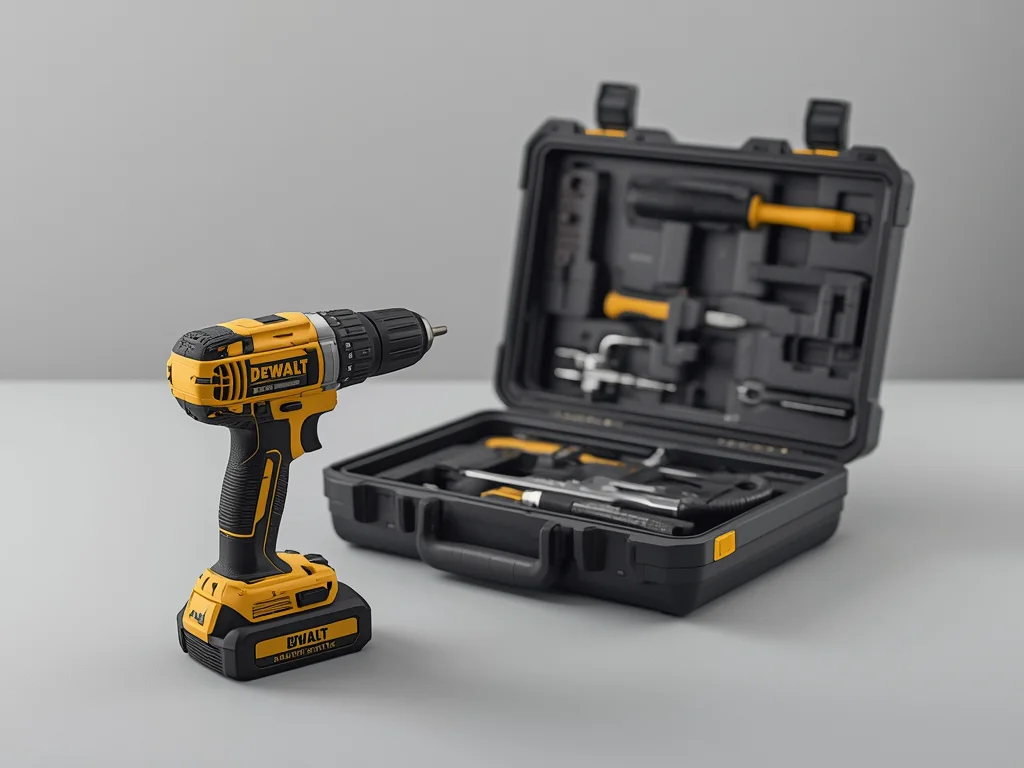
Take an impact drill as an example. New, it costs around R$ 400. A typical daily rental runs about R$ 45. The break-even point is approximately 9 days. Someone who uses a drill only to hang a TV, assemble furniture, and make a few holes during a renovation probably uses it no more than 3 to 4 days a year.
Drill: how the 9-day rule changes everything
Renting a drill for R$ 45 and using it 2 days a year costs R$ 90. Buying one for R$ 400 and using it 2 days effectively costs R$ 200 per day of use in the first year, while the tool sits idle for 363 days. For the purchase to make financial sense, you need to use the drill at least 9 days in the same year, or accumulate that use over 2 or 3 years, not counting the cost of bits and maintenance.
Tent, SUP board, and projector: three real calculations
A 6x6 m tent new costs around R$ 3,500 and rents for about R$ 120 per day. The break-even point is close to 30 days. For someone who sets up a tent for 2 or 3 events per year, that means 3 to 6 days of use, well below the threshold. Beyond the cost savings, you also avoid storing 36 square meters of canvas at home.
An entry-level stand up paddle board, between R$ 900 and R$ 1,200, rents for about R$ 70 per day. The break-even falls between 13 and 17 days. Someone who goes to the beach only in summer, with 4 or 5 outings a year, typically stays well below that. A Full HD projector with 3,000 lumens costs around R$ 2,200 and rents for about R$ 60 per day: someone who uses it once a month reaches 12 days per year, while the break-even is at 36 days. Three years of monthly use do not reach the purchase price.
Space and maintenance: the costs the math forgets
The break-even calculation only compares purchase price and rental cost, but there are two other factors: storage and maintenance. A 400-liter cement mixer takes up over one meter of garage floor and weighs about 100 kg. A 6x6 m tent needs a dry space to avoid mold. A SUP board stored in direct sunlight degrades faster.
Maintenance has a real cost. Drills wear through carbon brushes and bits lose their edge. Projectors with traditional lamps replace that component every 3,000 to 4,000 hours of use, at a cost between R$ 200 and R$ 400 per replacement. Renters bear none of these costs.
When renting instead of buying makes more sense
These signs indicate when renting instead of buying is the smarter choice for a specific item:
- Annual use below the break-even point: fewer than 9 days for a drill, fewer than 13 for a SUP board.
- Large-volume item with no adequate storage space at home.
- An activity you are testing before committing to a purchase.
- A one-off event or a season with a fixed end date.
- Item that requires specialized technical maintenance.
Is it worth renting? How to confirm in practice
Renting is worth it when the math shows annual use well below the break-even point, especially when storage is also a problem. A stationary bike that will sit unused for 11 months costs around R$ 1,500 to buy or about R$ 80 per day to rent. Using it for one full month runs about R$ 400 in rental versus R$ 1,500 to buy.
When the math points the other way, with use above the break-even and no storage problem, buying is usually the right call. A pressure washer used every week to clean the car and driveway can reach 50 days per year, which comfortably exceeds the break-even for an R$ 800 machine.
Frequently asked questions
How do I calculate whether renting or buying is cheaper?
Divide the purchase price by the daily rental cost. If the number of days you use the item per year is lower than that result, renting is cheaper. If it is higher, buying usually makes more sense.
When is renting instead of buying the smarter choice?
When annual use falls well below the break-even point, when the item takes up a lot of storage space, requires specialized maintenance, or when you want to try the activity before investing in equipment.
Does Alugoae have items available in Itajaí and Balneário Camboriú?
Yes. The platform operates in Itajaí, Balneário Camboriú, and Navegantes, with listings in categories such as tools, parties and events, sports and leisure, home and garden, electronics, and furniture.
Search for the item you need and see how much it costs to rent before deciding to buy.